
Wall of Leaves
In 2024, with the intention of opening my studio as a gallery and workshop space for the local community, I decided to print the exterior wall of my studio. It all began with a sense of curiosity and sheer amazement at the size of my giant sunflower leaves and their beautiful heart-shaped forms.
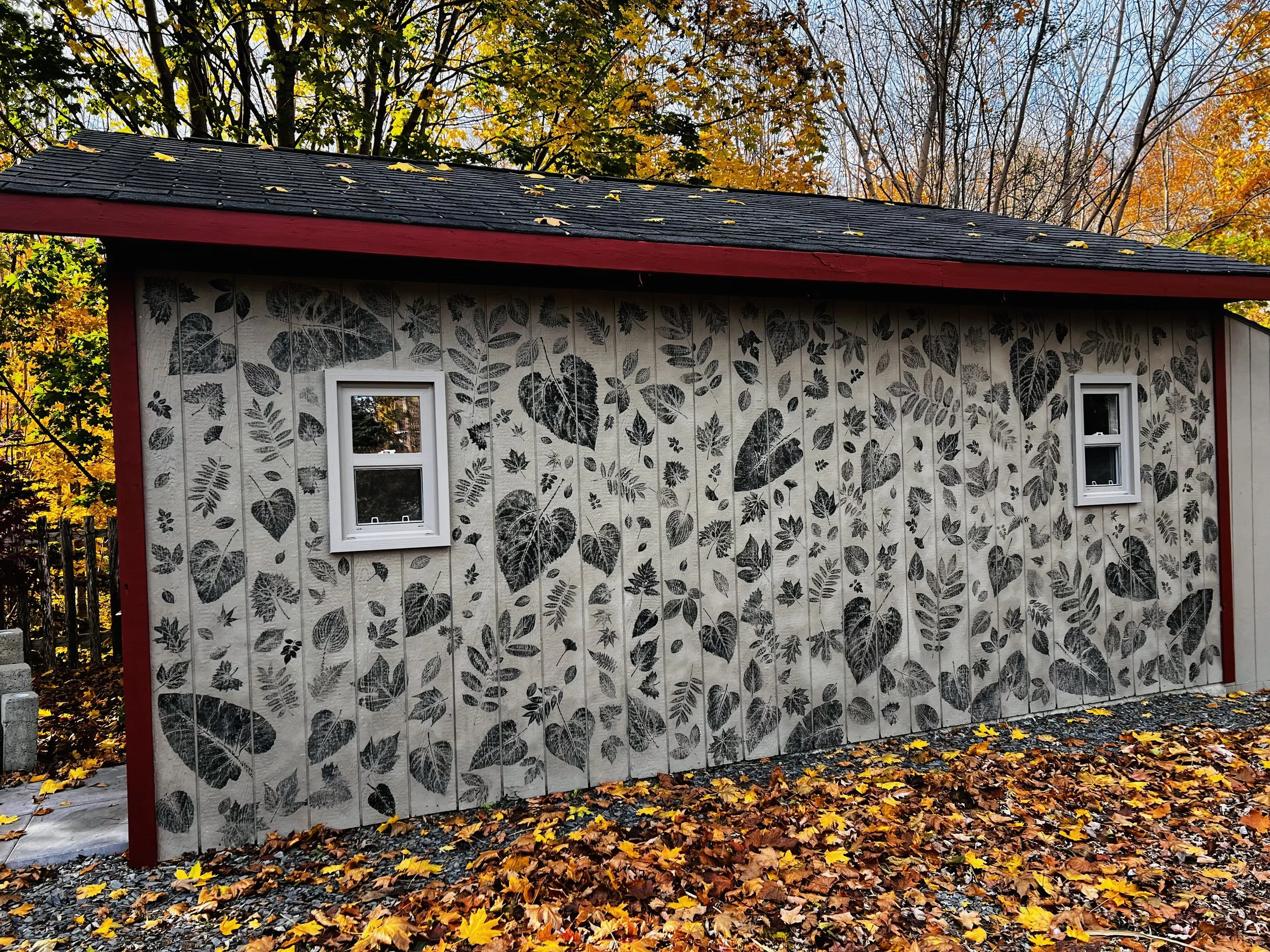
Printed Fall 2024
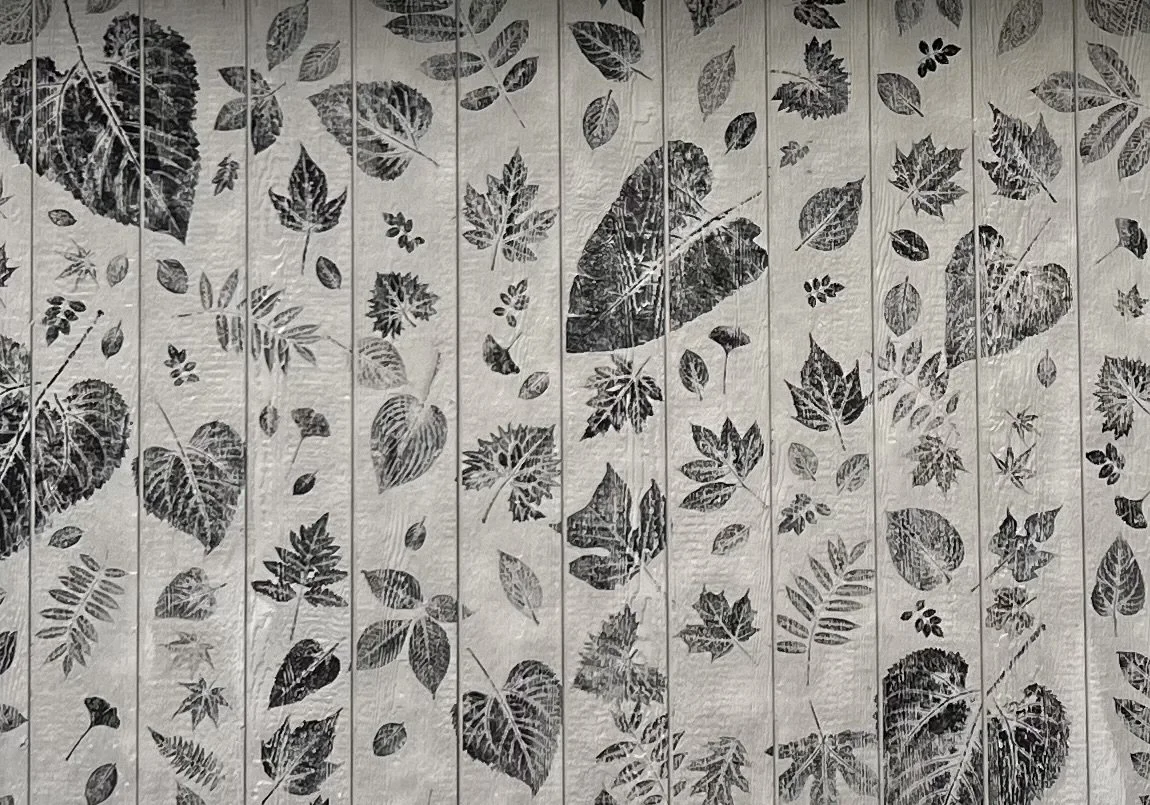
Direct Botanical Printed Exterior Wall
As summer transitioned into fall, I gathered leaves from around the property. It felt deeply meaningful to print these leaves during this fleeting time of year—a bold yet subtle reminder of the beauty and impermanence of nature. Like many nature printers, I’m drawn to that moment when a plant is still strong but beginning to change, when veins are pronounced and edges are starting to soften. The leaves I chose were not perfect specimens; they bore signs of weather, insects, and time. Those marks felt essential.
The idea of printing directly onto the studio wall grew slowly. I had been thinking a lot about thresholds—inside and outside, private studio practice and public engagement. If the studio was going to become a place where people gathered to make, learn, and talk about nature printing, then it felt right for the building itself to carry those values. Printing the wall became a way to let the land quite literally leave its mark on the space.
My fascination soon turned to an often-overlooked specimen: the great burdock. With its large, vaguely heart-shaped leaves, it captivated me. Burdock grows abundantly here, often in disturbed soil and along edges. It’s a plant many people pull without a second thought, yet it carries a long history of medicinal use and cultural significance. I was drawn to its scale, its toughness, and the way its veins read almost like a circulatory system. Printing burdock felt like an act of attention and acknowledgement.
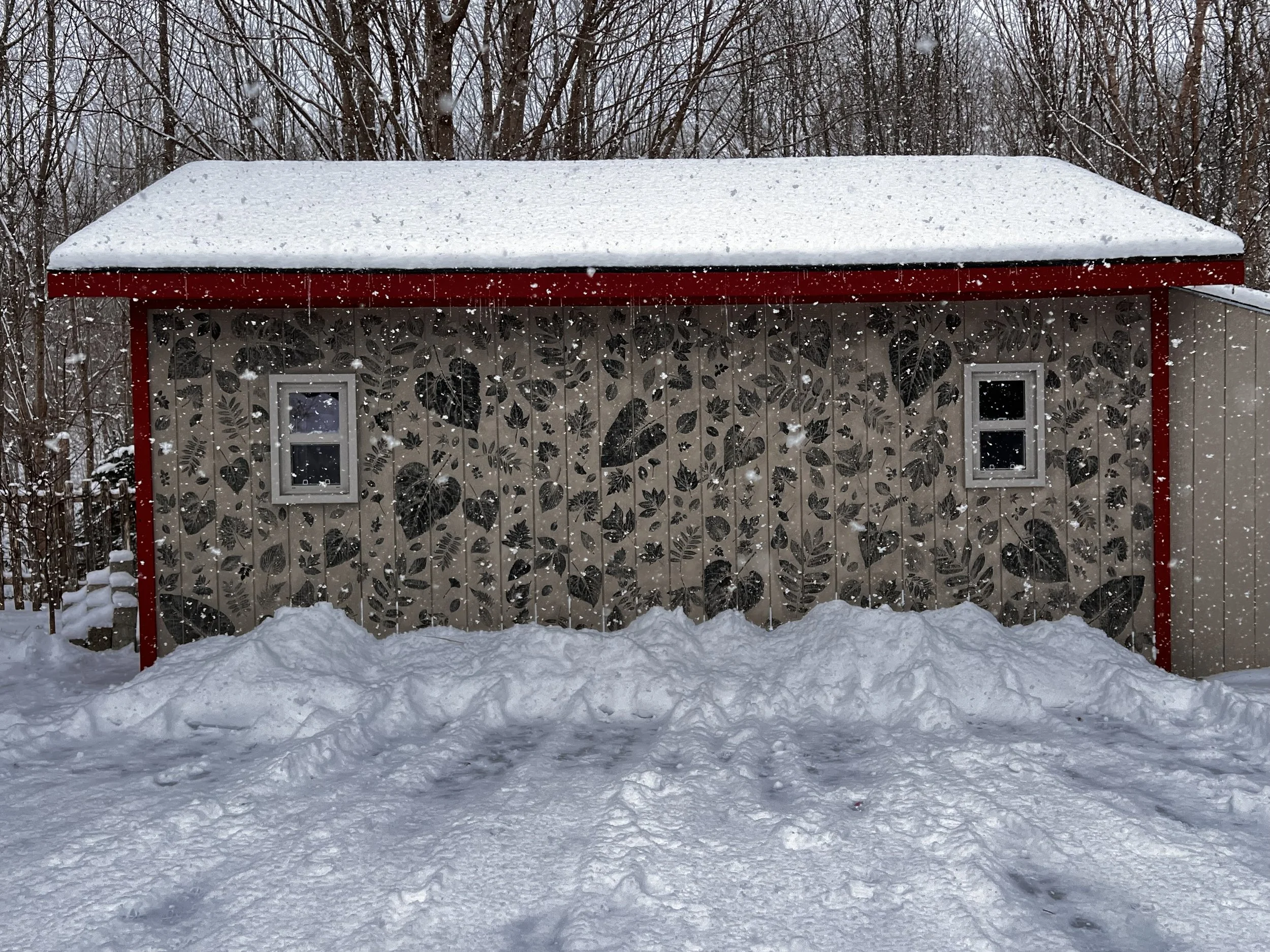
First Winter 2025
From a practical standpoint, the wall itself presented some questions. The studio is clad in wood siding and painted a deep brown. I wanted the prints to be clearly visible, but also integrated—present, not flashy. Because of the number of leaves I was working with, and because I needed flexibility while working outdoors, I chose to use a water-based ink. Being able to clean up easily as I went along was essential, especially when working at scale and against the clock of changing weather. I was also concerned that an oil-based ink might not react well with the exterior paint or cure properly on the surface.
The process itself was straightforward and intentionally simple. Each leaf was inked individually and pressed directly onto the wall by hand. There was no baren —just steady pressure, responsiveness, and a willingness to accept variation. The wood siding added its own texture, catching ink unevenly in places, which I came to see as part of the collaboration. Some impressions are crisp and bold; others are faint, partial, or broken. Together, they form a rhythm rather than a uniform pattern.
I worked whenever the weather allowed, finishing the wall while conditions were dry and mild. There was something grounding about working outside for extended periods, responding to light, temperature, and fatigue. It reminded me that nature printing has always been as much about timing and conditions as technique.
Once the printing was complete, I sprayed the entire wall with two coats of exterior matte varnish to protect the images. After the first winter, I applied an additional coat. Watching the wall weather over time has been one of the most rewarding aspects of the project. The prints have softened slightly, and the surface now carries subtle traces of sun, wind, and rain. Rather than seeing this as deterioration, I see it as continuation. The wall is still in conversation with the environment that produced the leaves in the first place.
This project sits within my broader practice, which explores personal history, place, and ecological materiality, rooted in the landscapes and seascapes of Nova Scotia. I work across painting, printmaking, mixed media, and installation, often using organic materials—plants, fish, seaweed—as active collaborators. Whether I’m working with botanical impressions or gyotaku, I’m interested in how material carries memory and how direct contact can foster a sense of relationship.
I’m drawn to processes where the specimen leads. Line, texture, fragility, resistance—all of these qualities shape the final image in ways I can’t fully control. That lack of control is part of what keeps me engaged. It’s also what connects nature printing to larger questions about how we relate to the living systems around us.
Time I spent living and working in Japan in the early 2000s continues to influence how I approach these questions. Traditions that emphasize impermanence, restraint, and respect for the more-than-human world left a lasting impression on me. Gyotaku, in particular, offered a way of thinking about printing as an act of honouring rather than extracting. That sensibility carries through all of my work, including the studio wall.
Here in Nova Scotia, the land and coast are constant teachers. Seasons are distinct, weather is unpredictable, and the marks of human and non-human activity are deeply intertwined. The studio sits on the unceded territory of the Mi’kmaq People, and an awareness of place as living and relational informs how I work and how I try to engage responsibly with materials.
The printed wall was also conceived as a welcome. As I open the studio more intentionally as a gallery and workshop space, the wall acts as a quiet introduction. Visitors encounter the leaf prints before stepping inside. Many recognize the plants immediately; others ask questions. Those conversations often become entry points into discussions about process, seasonality, and attention—things nature printers know well.
Inside the studio, the work continues across different mediums, but the values remain consistent. Hands-on engagement with natural forms, respect for material, and a willingness to let the process guide the outcome are central. Printing the wall simply extended those values beyond paper and into the built environment.
For me, the project reaffirmed something I suspect many nature printers feel: that printing is not just about making images, but about noticing. About slowing down long enough to really see a leaf, to understand when it’s ready to be printed, and to accept what it offers in that moment. By printing the studio wall, I wanted to make that way of seeing visible—to let the building itself carry an imprint of curiosity, care, and seasonal change.
